
RESISTANCE AND COUNTERTRANSFERENCE IN CHILD AND ADOLESCENT PSYCHOTHERAPY
Summary
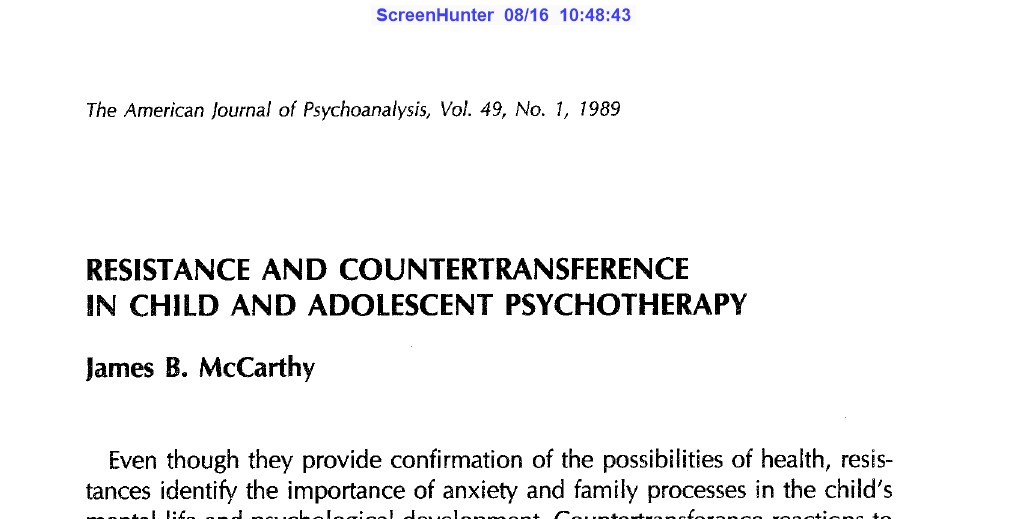
This paper examines the relationship between resistance and countertransference in psychotherapy with children and adolescents. McCarthy emphasizes that resistance should not be understood only as the child’s opposition to treatment; it can also communicate anxiety, family conflicts, and difficulties in the child’s development.
The author highlights the importance of the therapist’s emotional responses to the child and the family. Countertransference can help the therapist understand the meaning of the child’s resistance and identify anxieties that are being repeated within the therapeutic relationship. At the same time, if the therapist is unable to reflect on these feelings, countertransference may become a form of resistance itself.
Overall, the paper suggests that understanding the interactions between child, parents, therapist, resistance, and countertransference is essential for effective psychotherapy. The therapist’s awareness of their own emotional responses can provide valuable insight into the child’s internal world and the family dynamics influencing the treatment.