
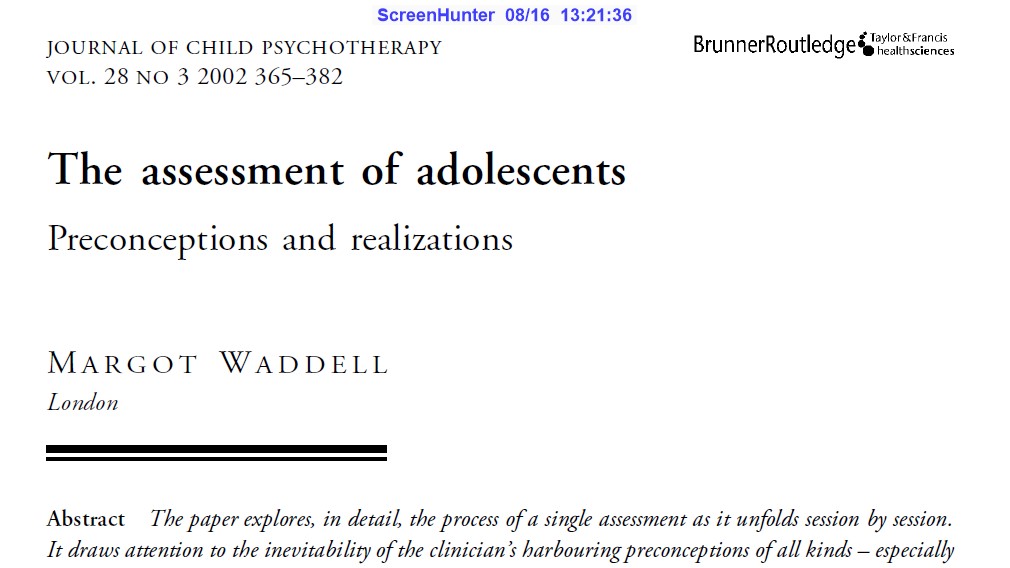
The assessment of adolescents
Summary
This paper explores the process of assessing adolescents from a psychoanalytic perspective. Waddell emphasizes that assessment is not simply a process of collecting information or identifying symptoms. Instead, it develops gradually through the relationship between the adolescent and the clinician, with attention to both conscious and unconscious anxieties.
A major theme is the influence of the clinician’s preconceptions. Waddell suggests that therapists inevitably form assumptions about adolescents, but effective assessment requires the therapist to recognize these assumptions and remain open to discovering the young person’s actual emotional experience. Transference, countertransference, and careful observation therefore become important tools in understanding the adolescent.
Using the assessment of a 17-year-old girl as a clinical example, Waddell explores issues that are particularly significant during adolescence, including identity, sexuality, separation, somatization, and fears of psychological disintegration. Overall, the paper presents assessment as a dynamic process in which the clinician gradually moves from initial assumptions toward a deeper understanding of the adolescent’s inner world and difficulties.