
the early development of conscience in the child
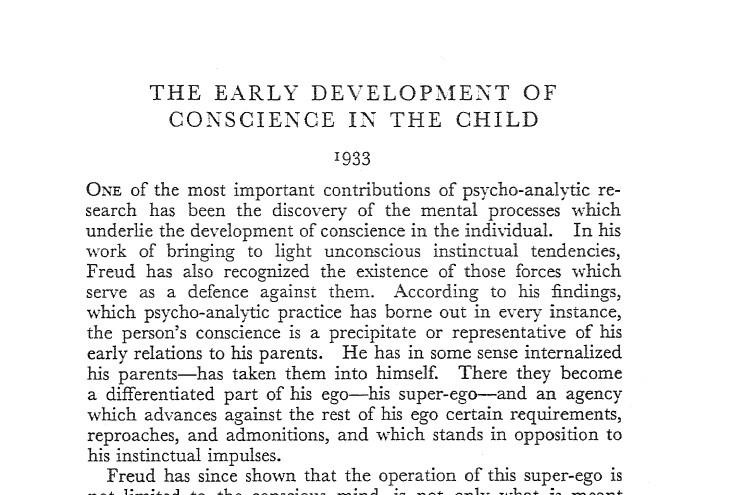
Summary of The Early Development of Conscience in the Child
In The Early Development of Conscience in the Child (1933), Melanie Klein explores how the child’s conscience develops during the earliest stages of psychological life. She argues that the foundations of the superego emerge much earlier than Freud had suggested, and that they are closely connected to the child’s early relationships with internalized parental figures.
Klein emphasizes the role of anxiety, guilt, aggression, and reparative impulses in the development of conscience. The child’s aggressive fantasies can create intense anxiety and fear of retaliation, while loving and reparative feelings contribute to the development of more integrated and stable moral functioning.
From Klein’s perspective, the development of conscience is therefore not simply a later process of learning social rules. It begins in early infancy through the child’s internal emotional experiences and relationships with significant figures. The quality of these early experiences influences the development of the superego and the child’s later capacity to manage aggression, guilt, responsibility, and concern for others.